Import Guides & Buyer EducationCompliance & Food Safety
Table of Contents
ToggleKEY TAKEAWAYS
Before diving in How to Source Fresh Produce from Egypt: A Complete Import Guide for European Buyers, here are the essential points from this guide:
- Supplier verification comes before price — Check certifications, traceability, and MRL compliance before discussing quantities
- 2026 EU MRL changes require action — Commission Regulation (EU) 2026/215 lowers limits for dimoxystrobin, ethephon, and propamocarb from August 2026
- Egyptian bell peppers peak Dec–Apr in Europe — Plan around true export windows, not generic availability
- Contract farming offers better control — Structured sourcing improves quality consistency and supply predictability
- Download our free checklist — Get our Egyptian Supplier Verification Checklist to evaluate exporters systematically
Why European Buyers Are Turning to Egypt
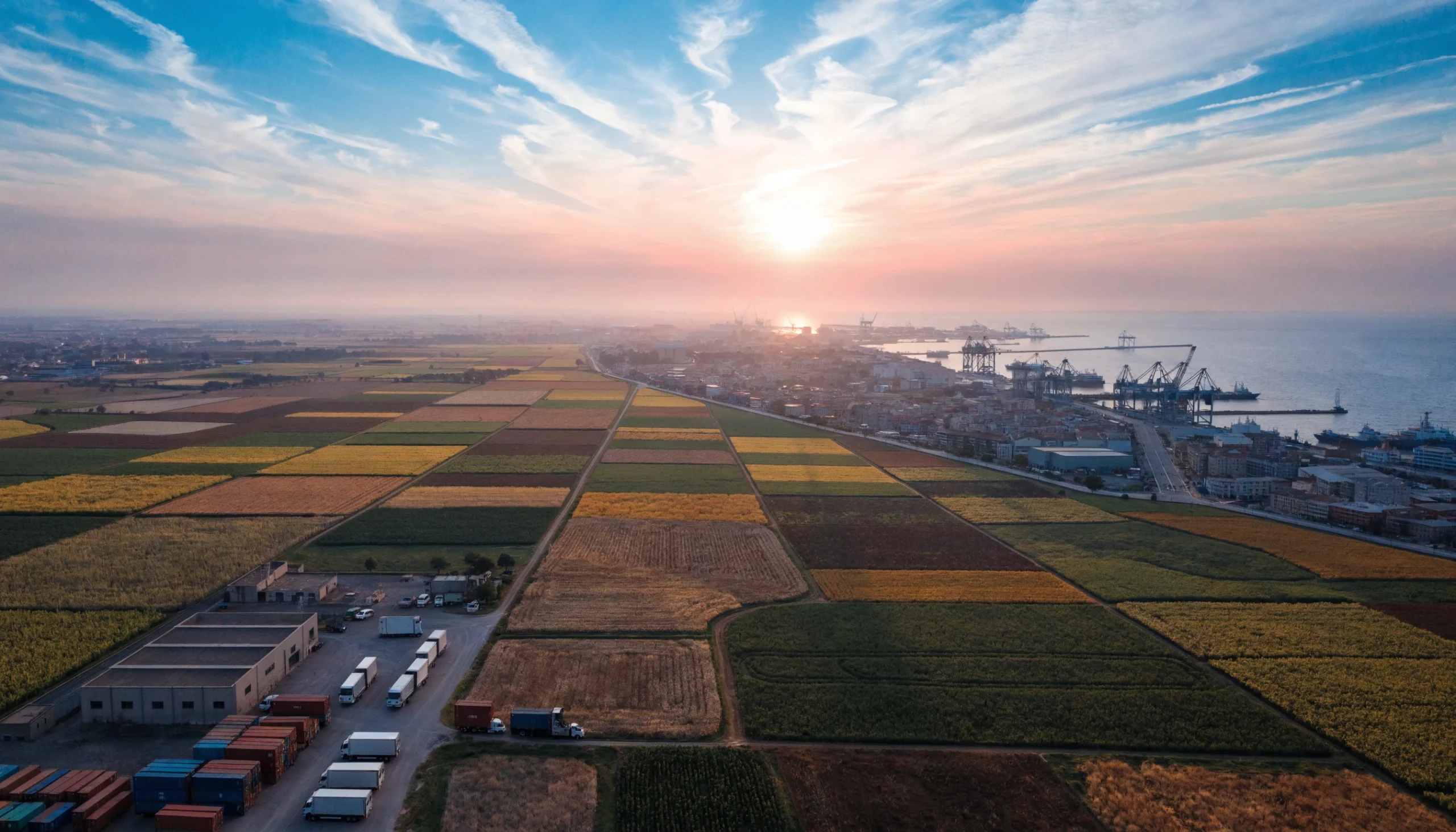
European buyers face mounting pressure to secure produce supply that is competitively priced, reliable, and compliant with increasingly strict food safety regulations. In this environment, Egypt has become an indispensable sourcing origin, particularly for winter and shoulder-season supply, risk diversification, and working with an export partner that genuinely understands EU market requirements.
Egypt offers a combination of geographic proximity to Europe, established cold chain infrastructure, and a horticultural sector that has made real progress on food safety compliance over the past decade. FAO The country now exports across a wide range of categories — from citrus and peppers to strawberries, beans, sweet potatoes, and frozen vegetables — giving importers flexibility to consolidate supply with fewer origins.
For Il Mondo Export specifically, we have spent over two decades building supplier relationships and internal capabilities that allow us to serve European buyers with the operational rigor they expect. In 2025, we facilitated the export of more than 3,000 metric tons of fresh produce to European markets, with MRL compliance rates exceeding 97% on first-shipment testing. That track record matters when buyers need to trust that their supply chain will perform under commercial pressure.
Step 1: Start with Supplier Verification, Not Price Comparison
The most common mistake we see among new buyers approaching Egyptian sourcing is moving too quickly to price discussions. In fresh produce, a low price can become very expensive if the exporter lacks the systems needed for EU compliance, traceability, or shipment consistency.
Before discussing quantities or pricing, evaluate whether the supplier can support the commercial and technical requirements of your target market. Ask specifically about:
- Farm-level standards — Are farms audited under GlobalG.A.P. or an equivalent scheme?
- Packing-house procedures — What quality controls exist at the pack house?
- Traceability systems — Can the exporter trace product from field to shipment with batch-level data?
- Residue testing protocols — How are pre-harvest and pre-shipment tests conducted?
- Documentation readiness — What certificates can be provided with each shipment?
Where certifications are claimed, verify them independently. GlobalG.A.P. offers a public GGN validation tool where you can enter a producer's GlobalG.A.P. Number and confirm active status. BRCGS provides a certified facilities directory for packing-house verification. Do not rely on verbal assurances or marketing claims when third-party validation tools exist and are freely accessible.
We recommend downloading our Egyptian Supplier Verification Checklist — a structured evaluation tool we use with new buyers to systematically assess exporter capabilities before formal engagement.
Step 2: Review MRL Compliance Early in the Process
For European imports, Maximum Residue Limit compliance is one of the most critical issues in supplier approval. The European Commission defines MRLs as the highest levels of pesticide residues legally tolerated in or on food or feed when pesticides are applied correctly according to Good Agricultural Practice. European Commission
Buyers should understand from the outset:
- Whether the supplier works with accredited laboratories for residue testing
- How pre-shipment or pre-harvest testing is scheduled and documented
- How pesticide-use records are maintained at farm level
- What happens if a residue result approaches a legal threshold
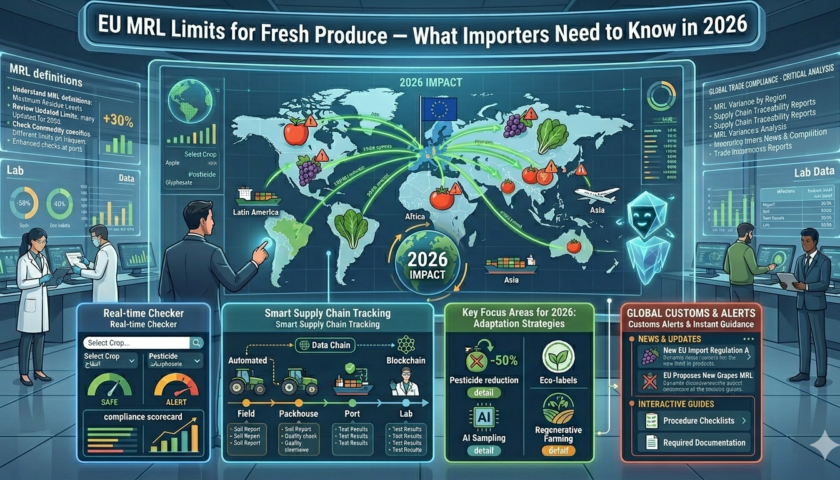
The EU Pesticides Database is the primary official tool for checking active substances and current MRLs by crop. For importers managing retailer-facing programs, this should be part of every supplier evaluation workflow. We go deeper into this topic in our articles on Navigating MRL Compliance for Egyptian Exporters to Europe and the Gulf and EU MRL Limits for Fresh Produce: What Importers Need to Know in 2026.
Step 3: Understand the 2026 EU MRL Changes
One of the most consequential regulatory developments for 2026 is Commission Regulation (EU) 2026/215, which applies from 19 August 2026. The regulation lowers MRLs for dimoxystrobin, ethephon, and propamocarb across several relevant product categories including table grapes, potatoes, beans, peas, lettuce, kale, herbs, and other vegetables. EUR-Lex
The practical implication is straightforward: supplier programs that were compliant under previous MRL thresholds may need adjustment before August 2026. Approved substance lists, crop protection planning, and residue testing priorities all need to keep pace with EU legal changes. A supplier that cannot articulate how they are preparing for these changes is likely not ready for long-term European business.
Step 4: Evaluate Logistics as Carefully as Compliance
Sourcing succeeds or fails on execution. Even with compliant, well-packed product, a program can underperform if logistics are not properly planned.
For Egyptian exports, evaluate:
Logistics Factor | What to Ask |
Port of loading | Which Egyptian ports are used, and how does routing affect transit time? |
Route structure | Are there direct routes to your destination port, or transshipment points? |
Transit time | What is the realistic door-to-door timeline for your category? |
Temperature management | How is cold chain maintained from pack house to delivery? |
Pre-cooling procedures | Is product pre-cooled within 2-4 hours of harvest? |
Documentation timing | When are phytosanitary certificates, COO, and quality reports issued? |
Incoterms clarity | Who bears risk and cost at each stage of delivery? |
Different categories have different logistics requirements. A citrus program has different shelf-life dynamics than a bell pepper program or a frozen vegetable shipment. Buyers who assess logistics by category typically achieve better quality outcomes than those who assume standard shipping patterns apply universally.
Step 5: Choose the Right Sourcing Model
Not every import program should be structured the same way. The three common models are:
Sourcing Model | Best For | Pros | Cons |
Spot Market | Flexibility, trials, opportunistic buying | Short-term flexibility, lower commitment | Less control over quality, traceability gaps |
Planned Sourcing | Predictable programs with defined volumes | Better planning, volume discounts | Less flexibility if needs shift |
Contract Farming | Retailer requirements, foodservice programs | Strongest quality control, crop planning | Higher commitment, longer relationship |
FAO and World Bank research both demonstrate that contract-based sourcing arrangements improve supply reliability and make quality requirements easier to manage compared to open-market procurement. FAO World Bank
For more on this decision, see our articles on Tailored Contract Farming Programs and Contract Farming vs Spot Market.
Step 6: Plan Around Real Export Windows
The strongest sourcing results come from buyers who understand the difference between nominal availability and true commercial windows. Egyptian exporters may market broad product availability, but successful buyers plan around actual harvest timing, export logistics, and destination market demand.
For example, Egyptian bell peppers have a commercially relevant European supply window running broadly from December through April, with the strongest timing aligned to gaps in competing origins.
Importers who build sourcing calendars around true market windows gain better control over pricing, product quality, and customer planning. Our Egyptian Bell Pepper Season 2026/27 guide provides a detailed example of this window-planning approach.
Step 7: Identify the Right Egyptian Partner
A reliable export partner is not necessarily the one making the strongest promises. It is usually the one providing the clearest operating picture and demonstrating track record.
Buyers should look for suppliers who are transparent about:
- What is available and when — Specific, verifiable availability statements
- What documentation can be provided — Quality reports, MRL test results, traceability data
- How compliance is monitored — Certification status, testing frequency, audit results
- Where the limits of the program are — Honest assessment of constraints
- How problems are escalated and resolved — Clear issue management procedures
At Il Mondo Expo, we provide every prospective buyer with a supplier capability overview before discussing commercial terms. This includes our certification portfolio, testing protocols, traceability documentation samples, and references from existing European buyers. We believe this transparency is what separates a sourcing partner from a transaction supplier.
Egyptian Produce Export Calendar: Key Windows
Product Category | Peak Egyptian Export Window | EU Market Relevance |
Bell Peppers | December – April | High (winter supply gap) |
Oranges | December – May | High (Citrus season) |
Strawberries | November – March | Medium (winter demand) |
Grapes | May – July | High (off-season supply) |
Green Beans | October – April | High (year-round demand) |
Sweet Potatoes | September – March | Medium (niche markets) |
Frozen Vegetables | Year-round | High (processing sector) |
What Makes Il Mondo Export Different
Understanding American retail requirements for
We have operated in the Egyptian fresh produce sector for over two decades, and we have learned that European buyers value predictability over promises. That is why we built our operations around:
- Documented compliance — MRL test results available for every shipment
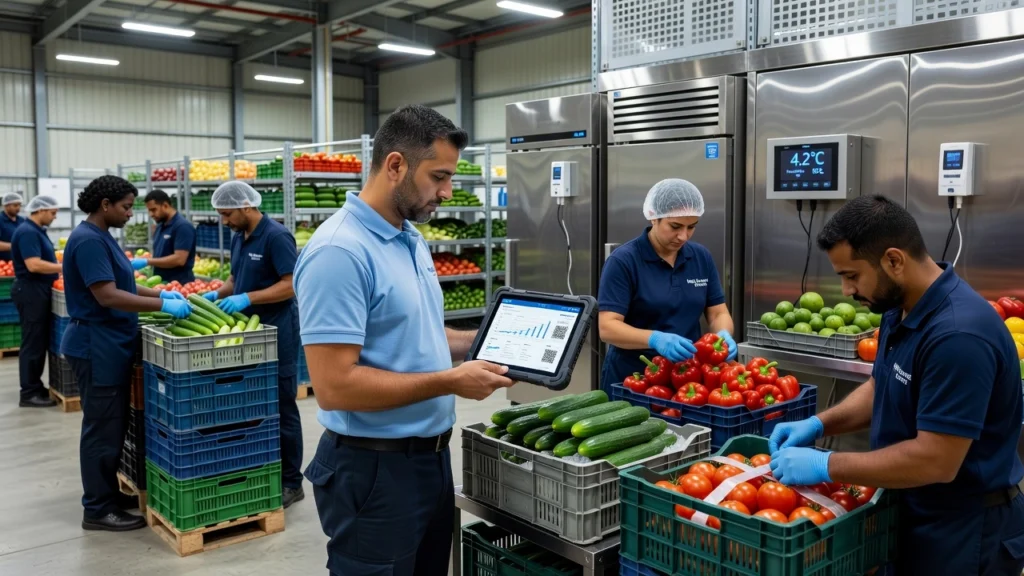
- Traceability from field to port — Batch-level tracking using digital records
- Temperature integrity — Cold chain monitoring from pre-cooling to delivery
- Flexible sourcing models — Spot, planned, and contract farming options
- Responsive communication — Direct contact with our export team, not a trading desk
We export to supermarkets, wholesale markets, and foodservice distributors across the European Union, Russia, the Gulf, and North Africa. Each market has specific requirements we handle as standard practice, not exceptions.
packaging and labeling was a key learning outcome. The training covered FDA labeling regulations, country of origin marking, nutrition facts requirements for processed products, and consumer preferences for sustainable packaging materials.
Conclusion: Build Confidence into Your Program
Sourcing fresh produce from Egypt is a strategically sound decision for European buyers who need to improve seasonal coverage, broaden origin options, and build more resilient supply chains. But the strongest results come from disciplined sourcing — verify suppliers, understand compliance frameworks, plan around true product windows, and choose a sourcing model that fits your business.
Successful sourcing from Egypt is not just about finding product. It is about building confidence into the program from the start.
FAQ AboutFood Export Council Training
What is the first thing a buyer should check when sourcing from Egypt?
Start with supplier verification before any price discussion. Use the GlobalG.A.P. GGN validation tool and BRCGS directory to confirm active certifications independently. Review traceability systems, MRL testing protocols, and packing-house procedures before moving to commercial terms. Our Supplier Verification Checklist provides a structured approach.
How can I check EU residue limits for a specific crop?
Use the European Commission's EU Pesticides Database to search for active substances and current MRLs by crop. Monitor EUR-Lex for regulatory updates, particularly the 2026 MRL changes in Commission Regulation (EU) 2026/215.
Is Egypt mainly a winter sourcing origin?
For many categories — particularly bell peppers, citrus, and strawberries — Egypt is most relevant in winter and shoulder-season windows. However, with cold storage and planned production, Egyptian exports can support programs across most months of the year for appropriate categories.
How does contract farming compare to spot market sourcing?
Contract farming or structured sourcing offers stronger quality control, better supply predictability, and clearer crop planning. It is particularly suitable for retailer-facing programs and foodservice distributors with defined volume requirements. Spot market buying offers flexibility but provides less consistency. FAO World Bank
Download: Egyptian Supplier Verification Checklist
Use this checklist to systematically evaluate any Egyptian produce exporter before committing to a commercial relationship.
What the checklist covers:
- Certification verification (GlobalG.A.P, BRCGS, EUGAP, ISO 22000)
- MRL testing protocols and documentation
- Traceability systems and batch tracking
- Packing house standards and quality controls
- Cold chain management and logistics capability
- Documentation readiness for EU imports