
Compliance & Food Safety
U nderstand the latest EU MRL limits for fresh produce in 2026, including key rule changes, importer risks, and how to source with stronger compliance control.
For fresh produce importers, EU MRL compliance is one of the most important commercial controls in the supply chain. It affects border risk, retailer confidence, supplier approval, and ultimately whether a sourcing program remains commercially sustainable. In 2026, importers need to pay attention not only to the standing EU framework, but also to new MRL changes, monitoring priorities, and policy proposals that may tighten the environment further. At Il Mondo Export, we believe importers should approach MRL management as an active procurement discipline, not a last-minute document check—part of a broader MRL compliance strategy. European Commission EFSA
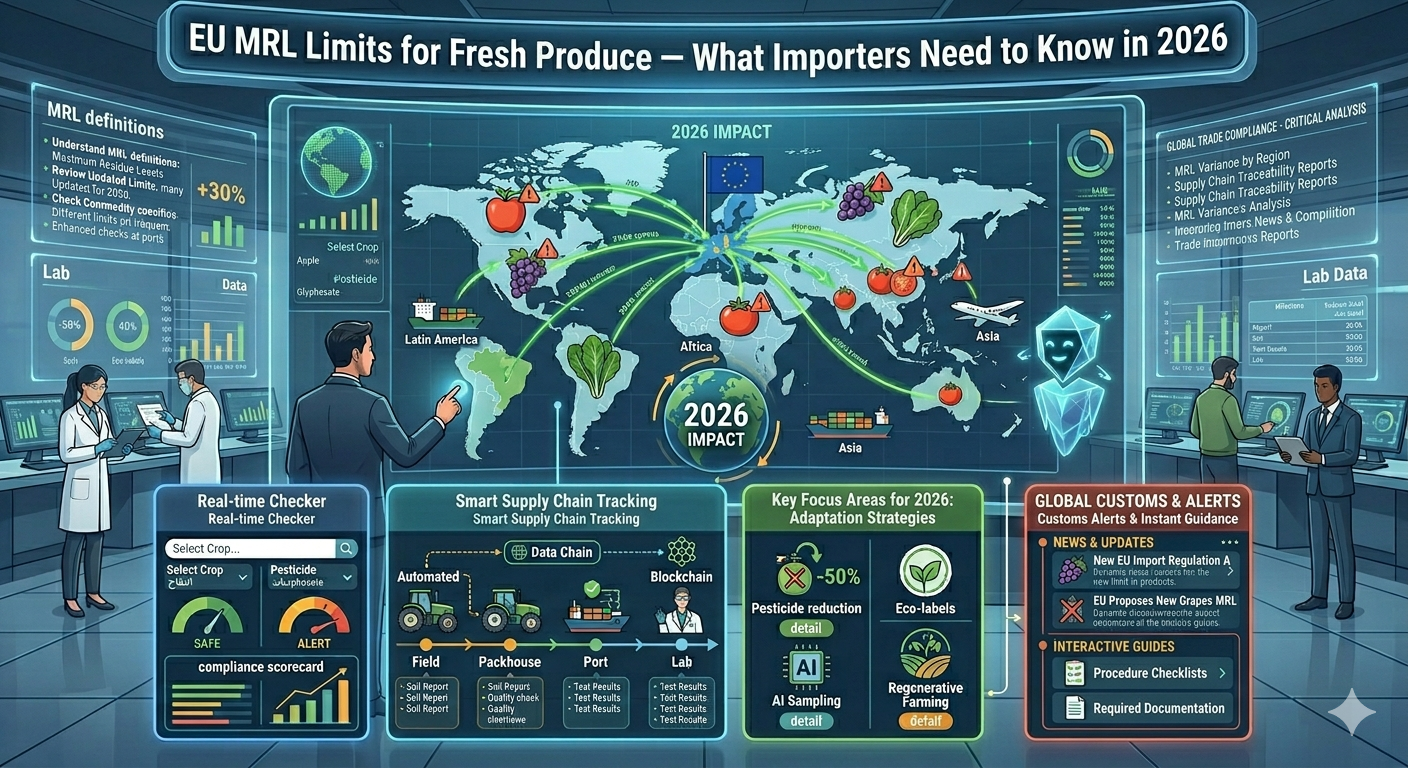
Table of Contents
ToggleThe first rule: use the official EU tools
The European Commission makes clear that the EU Pesticides Database is the reference tool importers should use to check active substances, food products, and the current or historical MRLs that apply to specific residue/product combinations. The Commission also notes that the database is informational and that the legally binding position is the Official Journal of the European Union. In practice, that means importers should use the database for day-to-day checking and confirm material changes through official EU legislation. European Commission
What changed in 2026
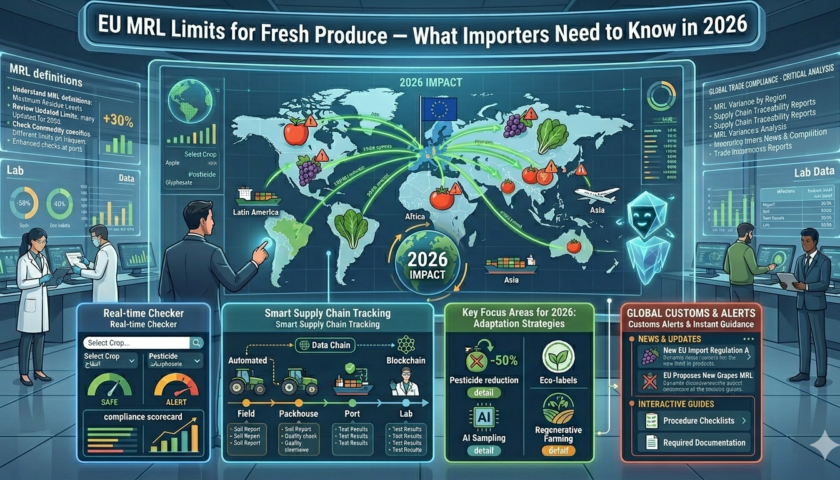
One of the most important 2026 updates for fruit and vegetable importers is Commission Regulation (EU) 2026/215. According to the official summary, this regulation lowers MRLs for dimoxystrobin, ethephon, and propamocarb, and it applies from 19 August 2026. The change is especially important because it affects commonly traded produce categories. Dimoxystrobin MRLs are reduced to the limit of determination or default value across products, effectively making detectable residues commercially risky. Ethephon MRLs are lowered for produce including table grapes, table olives, potatoes, kohlrabi, beans with pods, and peas with pods. Propamocarb MRLs are lowered across a much wider range of vegetables and herbs, including lettuce, Chinese cabbage, kale, beans, peas, beetroot, radishes, turnips, parsley, basil, rosemary, thyme, and others. EUR-Lex
For importers, this matters because a program that was acceptable before August 19 may need different agronomic control, different supplier instructions, or different residue testing before the new date.
For importers, this matters because a program that was acceptable before August 19 may need different agronomic control, different supplier instructions, or different residue testing before the new date.
Monitoring is not theoretical — it is constant
EFSA states that pesticide residues are systematically monitored in food on the EU market, whether produced within the EU or imported, and that the EU analyzes more than 100,000 food samples each year. That level of monitoring is one reason buyers cannot rely on general assurances from suppliers. The compliance standard is practical, evidence-based, and continuously enforced. EFSA
Importers should also watch the coordinated EU control program. A 2026 implementing regulation sets the 2027–2029 monitoring cycle, and while 2026 samples continue under the previous program, the new framework signals what products and pesticide combinations will receive focused attention next. Notably, sweet peppers / bell peppers are among the 2027 focus products listed in the new cycle. For importers, that is an early warning to strengthen supplier checks before the control pressure becomes more visible in the market. EUR-Lex
Importers sourcing this category should also review our guide to the Egyptian bell pepper export season for planning insights.
This is especially relevant for buyers managing bell pepper sourcing programs into EU markets.
What importers should watch beyond current law
A further 2026 development is the European Commission’s broader policy direction on imported products. A USDA/FAS analysis of the proposed Food and Feed Omnibus package explains that the Commission is seeking the power, in some circumstances, to reduce residue levels for certain non-EU-approved pesticides to the limit of quantification, effectively a technical zero. This is still a proposal rather than final law, but it matters because it increases uncertainty around import tolerances based on third-country GAP or Codex limits. In short, even where a residue has historically been managed through import tolerance, importers should not assume the future framework will remain unchanged. USDA FAS
What smart importers are doing in 2026
The strongest import programs are doing four things consistently. First, they are checking the EU Pesticides Database before agreeing product specifications. Second, they are updating supplier protocols whenever a legal change affects the crop. Third, they are using pre-shipment testing more strategically instead of only reactively. Fourth, they are choosing supply partners who can align field practices to market requirements rather than simply offering product at origin. Many buyers achieve this through structured contract farming programs that align field activity with destination-market standards.
This is where Il Mondo Export adds real commercial value. Importers do not only need produce; they need origin-side alignment with destination-market rules. That means traceability, agronomic discipline, documentation, and shipment preparation all need to work together. That requires robust quality and compliance systems that support traceability, testing, and documentation. Learn more about our export philosophy and how we approach buyer-focused sourcing partnerships.
Need Better Compliance Visibility?
IL Mondo Export helps importers source Egyptian produce with stronger residue-risk management, traceability, and export readiness.
Conclusion
EU MRL limits in 2026 are not just a compliance topic — they are a sourcing strategy topic. With new MRL reductions taking effect in August, continued intensive monitoring, and proposals that may tighten import tolerances further, importers need a more active approach to residue-risk management. At Il Mondo Export, we see that as part of modern export partnership: helping buyers source with fewer surprises and stronger confidence.
Frequently Asked Questions AboutEU MRL
What is the best official tool to check EU MRL?
The European Commission’s EU Pesticides Database is the main reference tool for checking MRLs, active substances, and product-specific residue limits. European Commission
When do the 2026 EU MRL changes for dimoxystrobin, ethephon, and propamocarb apply?
They apply from 19 August 2026. EUR-Lex
Are imported products monitored in the same EU system?
Yes. EFSA states that imported and EU-produced food are both systematically monitored. EFSA
Should importers worry about future tightening?
Yes. A 2026 EU proposal could reduce some non-EU-approved pesticide import tolerances to the limit of quantification, though that proposal is not yet final law. USDA FAS