

Import Guides & Buyer EducationCompliance & Food Safety
Table of Contents
ToggleKEY TAKEAWAYS
- Egyptian mango season entering final weeks with limited availability through early August
- Kent variety at peak production with excellent quality across all varieties
- Competitive pricing maintained despite late-season supply constraints
- Stone fruit season essentially complete; summer transition approaching
- 2026-27 citrus season planning should begin immediately for November start
Current Market Status: July 18, 2026

The Egyptian summer produce season is transitioning as we enter the final phase of mango production. This week’s market assessment provides detailed visibility into supply conditions, pricing dynamics, and forward-looking considerations for European importers.
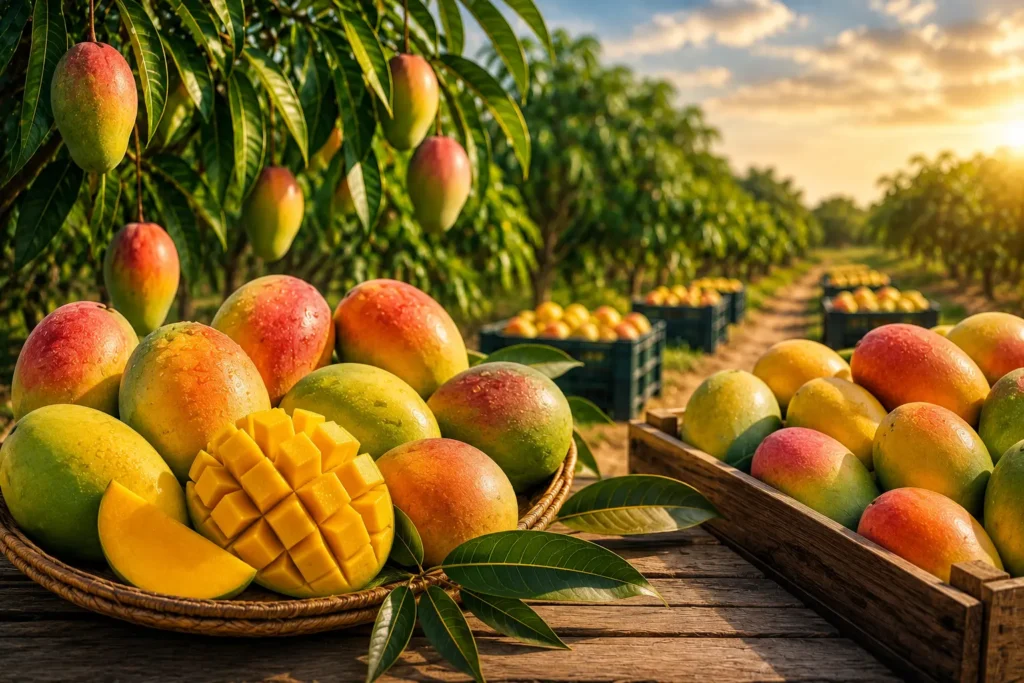
Mango Season Status: Egyptian mango production enters its final weeks, with availability expected through early August before season completion. Kent variety remains the dominant export variety, with Keitt production continuing at strong levels. Quality assessments across varieties indicate excellent eating characteristics—Brix levels averaging 18-20° reflect optimal maturity and sugar development.
Stone Fruit Season: Egyptian peach and nectarine production has essentially concluded for the season. Limited spot availability may exist but represents final harvest remnants rather than systematic supply. Apricot production completed several weeks ago. Importers requiring summer stone fruit should look toward alternative origins for remainder of summer.
Melon Availability: Egyptian cantaloupe and Galia melon production continues at reduced levels as the season approaches completion. Quality remains good, though volume has declined from peak periods. Full transition expected within 2-3 weeks.
Vegetables: Year-round Egyptian vegetable programs including potatoes, tomatoes, and carrots maintain stable supply for European importers. These categories provide continuity during seasonal transitions and support diverse product portfolio approaches.
Mango Season Analysis: Final Phase Dynamics
Understanding the dynamics of the mango season's final phase helps importers optimize remaining procurement opportunities and plan transition strategies.
Production Decline: Egyptian mango production follows predictable seasonal patterns, with peak availability during June-July and declining availability through August. This year's production patterns align with historical norms, with final weeks characterized by reduced volume rather than quality decline. Fruit sizing may trend toward smaller berries as the season progresses, reflecting natural maturation patterns.
Quality Outlook: Quality remains excellent through the final phase. Egyptian growing conditions—warm temperatures, adequate irrigation, optimal sunlight—produce mangoes with excellent flavor development even as volume declines. Brix levels during July typically exceed early-season readings as extended maturation builds sugar content. Importers should not assume quality compromise simply due to late-season timing.
Availability Projections: Current production estimates suggest adequate supply through approximately July 25-30 for Kent variety, with Keitt potentially extending slightly longer. After these dates, Egyptian mango availability essentially concludes until next season. Importers with remaining requirements should confirm availability immediately and secure final volume commitments.
Spot Availability: Spot market availability becomes increasingly constrained during the final season phase. Suppliers naturally allocate remaining production to committed customers with existing contracts before offering spot availability. Importers seeking spot purchases during this period may face limited options and premium pricing.
Pricing Dynamics: End-of-Season Characteristics
Egyptian mango pricing reflects seasonal dynamics that importers should understand for effective procurement planning.
Current Pricing: Egyptian mango pricing to European markets ranges approximately €1.20-1.40 per kilogram FOB Alexandria for Kent variety, with Keitt pricing slightly higher at €1.35-1.55 reflecting premium positioning. These prices represent rough market averages; specific pricing varies by supplier, quality tier, and commercial relationship.
Season-End Pricing Pattern: Unlike some produce categories that experience price decline at season's end, Egyptian mango pricing typically remains stable or firms slightly during the final phase. Reduced supply availability offsets demand softening that sometimes accompanies late-season timing. Importers should not expect significant price reduction simply because the season approaches completion.
Forward Pricing Outlook: Pricing for remaining Egyptian mango availability through early August should remain at current levels with limited downward flexibility. Importers with remaining volume requirements should secure pricing promptly rather than anticipating seasonal decline. Post-August, Egyptian mango pricing becomes irrelevant until next season begins in July 2027.
Comparative Value: Egyptian mango pricing remains competitive against alternative origins serving European markets during the August-September period. South American and Caribbean origins supply limited quantities during these months, maintaining relatively firm pricing. Egyptian pricing advantage becomes relevant again when Egyptian season resumes in July 2027.
Quality Assessment: Current Conditions
Egyptian mango quality assessments for July reflect optimal growing conditions and proper harvest timing.
Kent Variety: Kent mangoes currently demonstrate excellent eating quality with Brix readings averaging 18-20°. The characteristic fiberless flesh provides smooth texture, while the sweet, rich flavor profile meets European consumer expectations. Color development shows the expected green base with characteristic red blush. Shelf life remains adequate for European distribution channels, typically providing 10-14 days of remaining market life upon arrival.
Keitt Variety: Keitt production continues at strong levels, offering the large fruit size and excellent storage tolerance that characterizes this late-maturing variety. Brix levels average 17-19°, slightly lower than Kent reflecting variety characteristics rather than quality compromise. The firm flesh and excellent shipping tolerance make Keitt suitable for extended distribution and retail programs requiring longer shelf life.
Maturity and Ripening: Egyptian mangoes ship with varying maturity levels depending on market requirements. European retail programs typically require mangoes with sufficient maturity to develop full flavor but firm enough to withstand distribution handling. Proper ripening occurs during distribution as mangoes receive appropriate temperature management. Importers should communicate specific maturity requirements to ensure supplier alignment.
Cold Chain Considerations: Temperature management during the final weeks of Egyptian mango season remains critical for quality maintenance. Transit temperatures of 10-12°C optimize storage life without chilling injury risk that occurs at lower temperatures. Egyptian exporters increasingly utilize GPS-monitored reefers that document temperature compliance throughout transit.
Logistics Update: Current Conditions
Egyptian export logistics remain functioning normally despite seasonal transition pressures.
Port Operations: Alexandria and Damietta ports continue operating normally with adequate capacity for current export volumes. Reduced stone fruit and melon volumes have freed capacity that previously supported heavy summer fruit movement. Container handling proceeds without delay.
Container Availability: Refrigerated container availability remains adequate for Egyptian mango shipments. The approaching end of the Egyptian mango season reduces overall reefer demand, improving equipment availability for remaining shipments. Importers should still confirm container booking 2-3 weeks in advance to ensure availability.
Transit Times: Standard transit times to major European ports remain within typical ranges: Alexandria to Rotterdam approximately 12-14 days, to Felixstowe 14-16 days, to Mediterranean ports 10-12 days. No significant delays reported at destination ports.
Booking Considerations: Importers with remaining Egyptian mango requirements should confirm bookings immediately. The narrowed availability window creates urgency that container availability cannot always accommodate. Last-minute bookings during the final weeks face heightened risk of equipment or space constraints.
Regional Demand Analysis: European Markets
European market demand patterns during July reflect seasonal factors that influence procurement strategies.
Western Europe: French, German, and Benelux markets continue demonstrating steady demand for Egyptian mangoes during the final season phase. Retail programs maintain mango displays through July despite declining availability. Foodservice demand remains moderate, reflecting typical summer patterns with vacation periods affecting volume.
Mediterranean Europe: Italian and Spanish markets show continued interest in Egyptian mangoes during July. These markets' geographic proximity enables rapid distribution that optimizes shelf life remaining upon arrival. Competition from local summer fruit production has less impact on mango demand than on other categories.
UK and Ireland: British markets maintain steady Egyptian mango demand, with quality consciousness driving preference for proven suppliers. The approaching end of Egyptian season creates urgency among UK importers seeking to secure final season supply. Post-August, UK markets will transition to limited alternative origin availability.
Scandinavian Markets: Nordic markets show continued demand for Egyptian mangoes despite higher distribution costs from extended transit. Quality consistency remains paramount for these markets, where consumer expectations favor reliable specification adherence over price competition.
Stone Fruit Season Assessment
The Egyptian stone fruit season has concluded, warranting brief assessment of the completed season.
Peach and Nectarine: Egyptian peach and nectarine production concluded in late June to early July, with final shipments reaching European markets in recent weeks. Season quality was excellent overall, with strong consumer reception reported across European markets. Volume committed to contract programs successfully delivered; spot availability was limited during peak demand periods.
Apricot Season: Egyptian apricot production completed several weeks earlier, concluding what proved to be a successful season. Quality characteristics met European retail requirements, with limited volumes extending into late-season specialty applications.
Looking Forward: Egyptian stone fruit will not return until the following season beginning approximately April-May 2027. European importers seeking stone fruit during August-October should look toward Spanish, Italian, and later Mediterranean origins to fill supply gaps.
Forward Outlook: August and Beyond
The approaching transition from Egyptian mango season creates considerations for importer planning.
August Supply Gap: Egyptian mango availability concludes in early August, creating a supply gap that alternative origins cannot fully fill. European markets will experience reduced mango availability during August-September until Southern Hemisphere production begins. Importers should plan inventory management accordingly.
Summer Vegetable Continuity: Egyptian potato, tomato, and carrot programs continue through August and beyond, providing supply continuity for these vegetable categories. Importers can maintain Egyptian supplier relationships for vegetables while sourcing mangoes from alternative origins during the gap period.
2026-27 Citrus Planning Critical: With only 3-4 months until the 2026-27 Egyptian citrus season begins (November), importers should prioritize citrus sourcing discussions. Contract negotiations, volume planning, and quality specification development require time before season start. The August-September period offers opportunity to complete planning before fall harvest activities intensify.
Mango Season 2027: Next season's Egyptian mango production will begin approximately July 2027, following the same seasonal pattern. Forward planning discussions can occur during the August-October off-season, enabling early commitment that secures supply and potentially favorable terms.
Pricing Summary
| Product | Current Price (€/kg FOB) | Trend | Availability |
|---|---|---|---|
| Kent Mangoes | 1.20-1.40 | Stable | Through July |
| Keitt Mangoes | 1.35-1.55 | Stable | Through July |
| Cantaloupe Melons | 0.50-0.70 | Firm | Limited |
| Galia Melons | 0.55-0.75 | Firm | Limited |
| Potatoes (July) | 0.25-0.35 | Stable | Year-round |
| Tomatoes (July) | 0.40-0.55 | Stable | Year-round |
FAQ AboutCurrent Market Conditions
How long will Egyptian mangoes remain available?
Current production estimates suggest availability through approximately July 25-30 for Kent variety, with Keitt potentially extending slightly longer. After these dates, Egyptian mango availability essentially concludes until next season begins in July 2027. Importers with remaining requirements should confirm availability immediately.
What quality can importers expect from late-season Egyptian mangoes?
Quality remains excellent through the final phase of the Egyptian mango season. Extended maturation during July typically produces higher Brix levels than early-season fruit. Size may trend toward smaller as natural maturation progresses, but eating quality should meet or exceed earlier-season levels.
Will Egyptian mango pricing decline as the season ends?
Unlike some produce categories, Egyptian mango pricing typically remains stable or firms slightly during the final phase. Reduced supply availability offsets any demand softening. Importers should not anticipate significant price reduction based on season timing.
What alternatives exist during the August supply gap?
European markets will have limited mango availability during August-September until Southern Hemisphere production begins. Importers should plan inventory management to cover existing commitments while identifying alternative supply options. Egyptian mangoes return in July 2027.
When should importers begin planning for the 2026-27 citrus season?
Importers should prioritize citrus sourcing discussions immediately, with 3-4 months until the November season start. Contract negotiations, volume planning, and quality specification development require time before harvest activities intensify. August-September offers opportunity for productive planning discussions.
What Egyptian products remain available during August?
Year-round Egyptian vegetable programs including potatoes, tomatoes, carrots, and other vegetables continue through August and beyond. These categories provide supply continuity and maintain Egyptian supplier relationships during the summer fruit gap.
Conclusion: Managing the Transition
The Egyptian mango season's final phase creates urgency for importers with remaining requirements while transitioning attention toward autumn planning. Excellent quality and stable pricing characterize current market conditions, providing favorable outcomes for committed purchasers. The approaching August gap in Egyptian mango availability requires inventory planning and potentially alternative sourcing strategies.
Forward-looking importers recognize that the current period offers optimal timing for 2026-27 citrus season planning. With only months until November harvest begins, completing supplier discussions, contract negotiations, and quality specification development now prevents the compressed timelines that sometimes compromise planning effectiveness.
The transition from Egyptian summer fruit to autumn produce represents an annual rhythm that sophisticated importers manage systematically. By maintaining supplier relationships across categories, planning proactively for seasonal transitions, and securing supply commitments during favorable periods, importers build sustainable programs that deliver consistent results year after year.